

With volatility becoming the norm in the supply chain, many shippers have begun reevaluating how they engage with third-party logistics (3PL) providers. As businesses increasingly rely on 3PLs for agility and flexibility during unexpected disruptions, some may find that their basic transactional relationships with logistics providers are no longer sufficient.
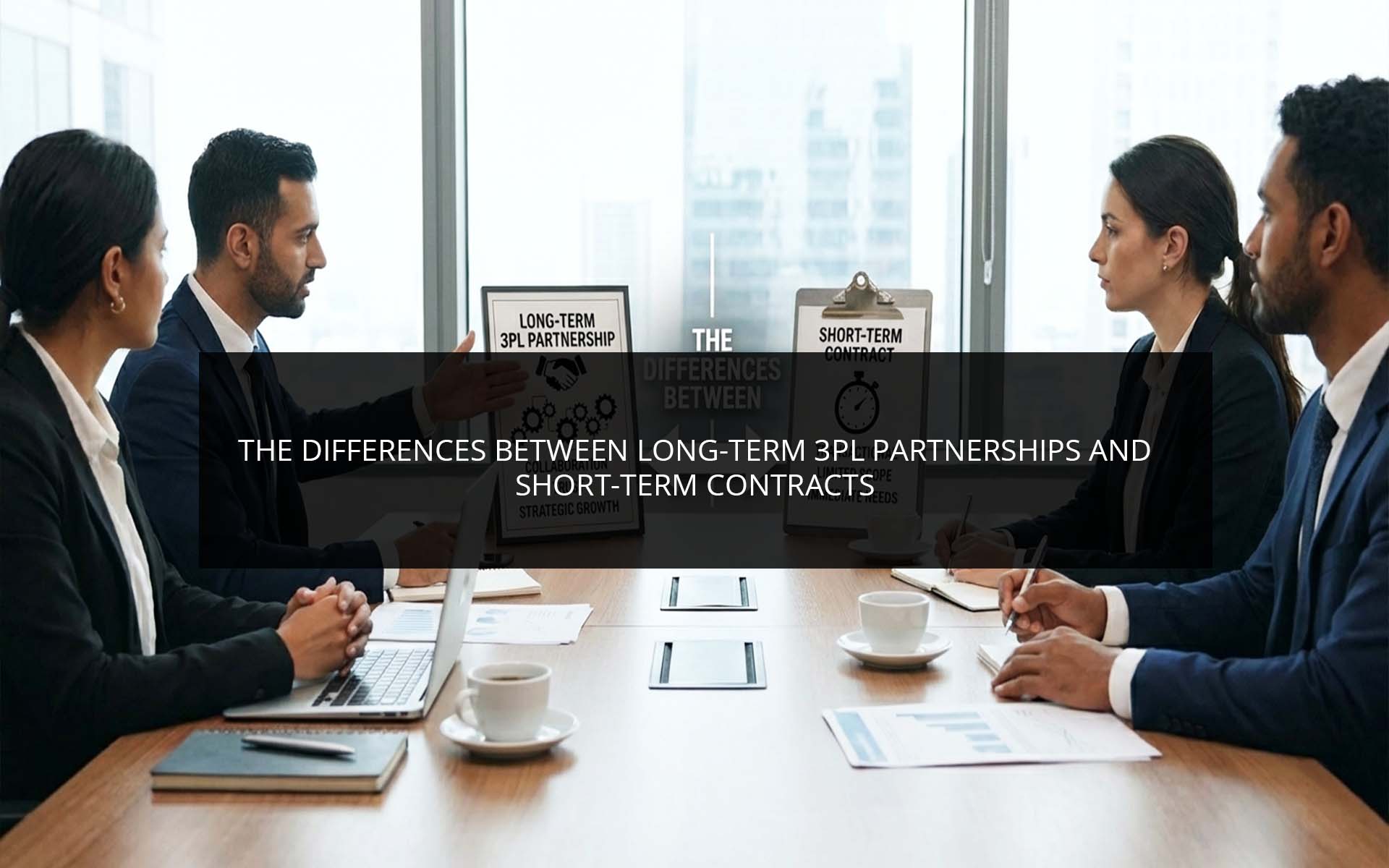
Long-term, strategic partnerships and short-term agreements with 3PLs both have their place in modern logistics, but they do serve fundamentally different purposes. Understanding the differences between these types of agreements can help shippers align their outsourcing model with their current and future business goals.
What is a Short-Term 3PL Contract?
Short-term 3PL contracts are inherently executed. In these agreements, a shipper leverages a 3PL to address a specific, often time-sensitive problem. This type of arrangement might involve handling inventory overflow or managing a one-off project by addressing immediate capacity constraints or otherwise adding flexibility to a coordination network on short notice.
Speed and cost are often the primary factors that rule out short-term 3PL agreements. Responsibilities and service-level agreements (SLAs) for the 3PL will typically be narrowly defined to expedite onboarding timelines.
However, the brief nature of these relationships also means that the 3PL will not gain a deep understanding of the shipper’s business or long-term roadmap. Also, there is extraordinarily little time to optimize processes or streamline workflows, increasing the risk of unexpected costs or higher error rates.
What Defines a Long-Term 3PL Partnership?
Conversely, a long-term 3PL partnership is built around shared goals, mutual investment, and continuous improvement. Rather than focusing on executing a predefined list of tasks, both parties collaborate on an ongoing basis to continually streamline processes and costs.
“Short-term solutions can solve immediate problems, but they don’t really create lasting value,” said Frank Crivello, founder and chairman of Phoenix Investors. “Long-term 3PL partnerships work because both sides align around growth, resilience, and improvements instead of just focusing on today’s shipments.”
As a more strategic relationship, a long-term 3PL partnership will include a multi-year agreement, technology integrations, shared data, and joint planning sessions. The 3PL gains a thorough understanding of the shipper’s needs and products, customers, and growth strategy, enabling it to make proactive recommendations for improvement rather than simply reacting to issues as they arise. This stability also allows both partners to make more substantial investments in automation and infrastructure that would not make sense in a short-term arrangement.
When Shippers Should Seek a Short-Term 3PL
While a short-term 3PL arrangement has limitations, those limits are by design and do not necessarily make it inferior to a longer-term agreement. Using a 3PL on a short-term basis can often be the right choice when issues exceed the shipper’s existing logistics capabilities. For example, a business might need help with:
- Highly unpredictable demand due to a supply chain disruption.
- Seasonal demand spikes.
- Testing new markets or sales channels.
- Mergers, acquisitions, or facility changes that place internal capabilities in flux.
- Handling situations where speed and flexibility are more important than cost.
When Long-Term Strategic Partnerships Have More Value
A long-term logistics partnership makes more sense when the shipper wants to make the 3PL a core part of the organization’s logistics strategy. In these situations, the 3PL becomes more like an extension of the shipper’s brand or operation, rather than a simple service provider. These types of engagements are especially valuable when:
- A shipper wants to make logistics or fulfillment a competitive differentiator.
- Customer experience is heavily tied to fulfillment performance.
- The business is on a growth trajectory.
- The shipper is undergoing a digital transformation that requires the 3PL to integrate technologies and share data.
- Supply chain resilience is a high priority.
Choosing the Right 3PL Model
The decision between a long-term partnership and a short-term contract is not always clear-cut. In fact, many organizations use a hybrid approach by maintaining core long-term partnerships while leveraging short-term providers to manage variability or special projects.
The right choice depends on how critical logistics is to your business strategy. For companies that want to stop the constant firefighting and move toward a proactive, strategic approach, investing in a long-term 3PL partnership can deliver significant value that extends beyond the four walls of the warehouse.
About Phoenix Logistics
Strategic Real Estate. Applied Technology. Tailored Service. Creativity. Flexibility. These fundamentals reflect everything we do at Phoenix Logistics. We provide specialized support in locating and attaining the correct logistics solutions for every client we serve. Most logistics competitors work to win 3PL contracts and then attempt to secure the real estate to support them. As an affiliate of giant industrial real estate firm Phoenix Investors, we can quickly secure real estate solutions across its portfolio or leverage its market and financial strength to quickly source and acquire real estate to meet our client’s need.

